

Introduction
As stated in the Cambridge Dictionary Online (2023), a border is defined as “a line that has been agreed to divide one country from another”. A similar territorial perspective is offered by the Collins Dictionary Online (2023), which describes a border as “the dividing line between two countries or regions” and “sometimes [a reference] to the land close to that line”. These definitions, grounded in the immediate common-sense notion of border, serve as a foundational point for our discussion on this concept. Therefore, we can raise multiple questions, such as: What variables contribute to the creation of that line? Who is responsible for its creation? Does that line undergo changes over time, and if so, what factors drive those changes? Do the border locals perceive and experience that line in the same way? By the end of this unit, you will be able to:
- understand the concept of border in its complexity and polysemy through the analysis of various semiotic resources;
- recognise multiple perspectives of borders (geopolitical, social, etc.) and understand their synergies;
- reflect on different representations and experiences within borders and beyond boundaries.
1.1. Much more than lands: from geopolitical boundaries to a holistic understanding of the concept of border
To understand and critically examine the concept of border in its polysemy, it is essential to consider the abstractionism inherent in it.
Figure 1 depicts a painting by Robert Motherwell (1967). How would you describe it? At first glance, it may appear to be a set of dark figures, right? Now, let’s add the title of the painting, “Elegy to the Spanish Republic”. Does this additional information alter or assist in deciphering its message? Perhaps, with this brief historical background, the abstract figures now seem to metaphorically represent a conflict between death and life in that period, shedding light on the pain of the author in apprehending that reality.
Figure 1. Representation of “Elegy to the Spanish Republic” (1967)

What is the point of presenting this painting and what is the relationship between the painting and a border? The purpose is to emphasise the parallel between the interpretation of the artwork and the understanding of borders. In both cases, it is essential to look beyond the surface and deconstruct the process of becoming a “physical materialisation” to understand the final product as a complex and diachronic construct shaped by political, historical, and sociocultural variables that establish synergies with each other. However, when we refer to “border”, what exactly are we talking about?
Firstly, it is crucial to acknowledge the existence of different types of borders:
(1) Geopolitical and territorial borders, including,
(1.1) Nation-state borders (Paasi, 2022), aligning with the definitions from the dictionaries cited earlier.
(1.2) Regional borders (ibidem), representing the socio-spatial lines and boundaries that exist inter- and intra-urbanistic contexts, encompassing legal rights.
(1.3) Labour market areas (ibidem), extending beyond the administrative organisation of the nation-state and regional borders to underscore economic exchanges (European Commission, 2018).
(2) Symbolic borders (Chouliaraki & Georgiou, 2019), comprising discourses produced by the state apparatus (e.g. the government) and ideological state apparatuses (e.g. the media, schools, religions) (Althusser, 1970, cited in Dervin, 2021) to shape public opinion.
(3) Linguistic borders (Saraceni & Jacob, 2018), serving as delimitations between different language systems or varieties.
(4) Cultural borders (Shimoni, 2006), which should be seen in a top-down perspective, as the result of global forces; and in a bottom-up perspective, where the local context has influence, as well, in people’s perception of boundaries.
In the following sections, we will focus on nation-state and regional borders to reflect on the linguistic and cultural diversity that characterises them.
A nation-state border is more than a mere delineation on a map; it serves as an ideological and symbolic manifestation shaping the perception of the territorial space. This contributes significantly to the construction and affirmation of a national collective identity (Kolosov, 2020; Paasi, 2022), and fosters a sense of belonging for individuals within that space and their relationships with its inhabitants. The configuration of a territory and its mapping with delineated borders enable the creation of an “idea of state sovereignty” (Ushakin, 2009, cited by Kolosov, 2020) within a shared imaginarium of a nation-state. Adopting topological thinking (Allen, 2016), we must analyse a territory beyond its geometry and topography. It is not a static entity, but a product of dynamic power relations and policies. In this context, we can not divorce the geographical understanding of the spatiality of a border from the political facet (Ek, 2012) and its social perspective (Nail, 2016). In his social approach, Thomas Nail (idem) goes further and argues that a theory of border necessitates a consideration of “kinopolitical history”. This involves understanding social movements and the various forms of circulation as integral parts of border history, particularly the dynamics of expansion and expulsion. These dynamics manifest as asymmetrical power relations, where one space dominates over other(s) (Pratt, 1993; Putsche, 2022). Along these lines, Elden (2009) views territory as a space where multiple geographies of terror, threat and fear are practised, sometimes leading to extreme consequences. Indeed, historic memory of those motions associated with an ideological imperialist ambition can result in a process of modern colonisation and, consequently, to forced migration. Kolosov (2020) refers to this process as “phantom pain”, where the desire to reclaim a once-annexed territory, because it is felt by people in the present as “their land”, violates the sovereignty of the other nation-state. Even in non-extreme cases, asymmetry is evident in the inequality between the organisational, administrative, and social structures of neighbouring countries (Hamman, 2019; Putsche, 2022). This inequality may compromise transnational cooperation and the social cohesion of that region.
1.2. One is not born, but rather becomes a cross-border local: ways of living, feeling and being in between and beyond boundaries
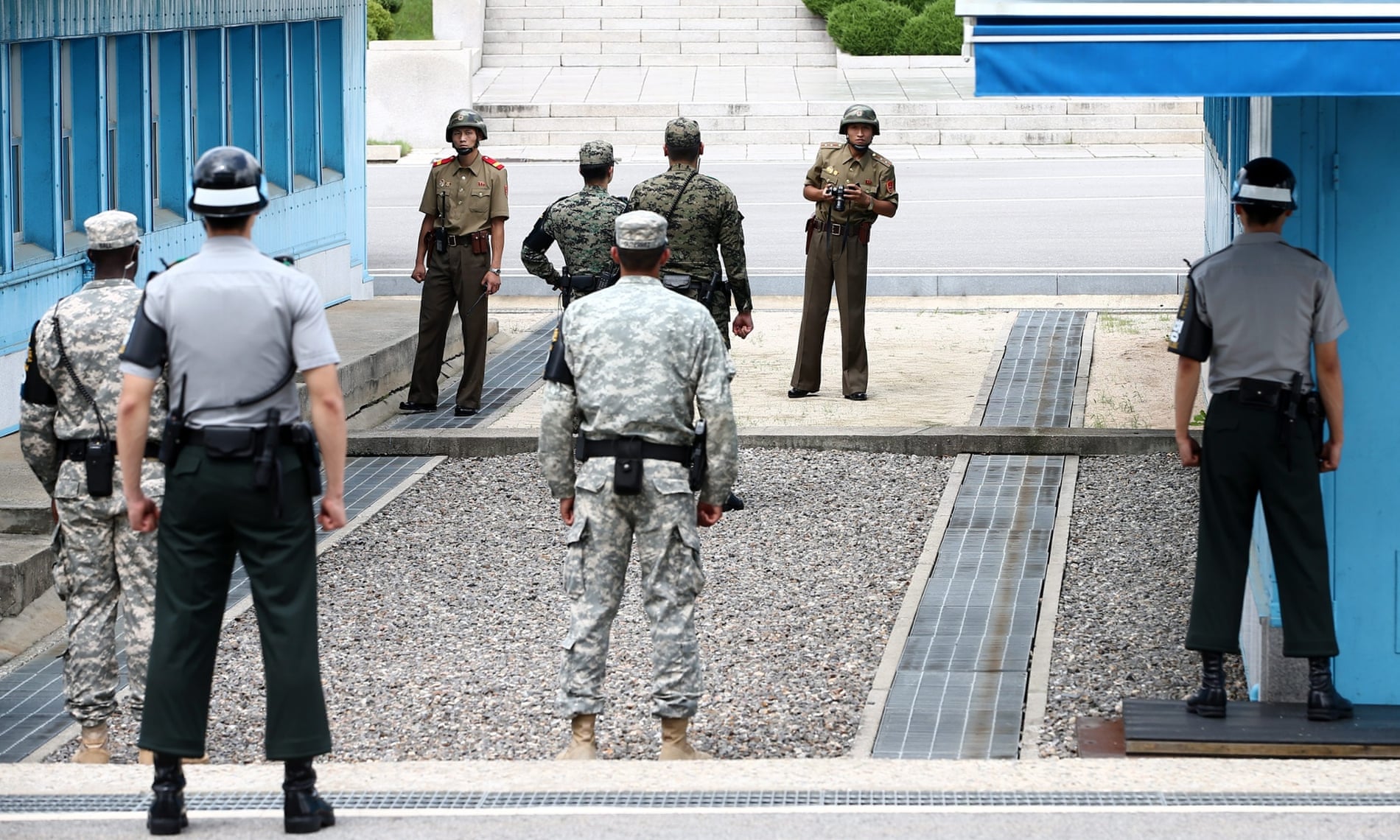
We live in an era of “liquid modernity” (Bauman, 2000), characterised by the fluidity of borders due to processes such as globalisation, digital development and migration. While these globalising forces encourage the dissolution of borders, events such as the COVID-19 pandemic and the emergence of radical and populist speeches, – often draped in nationalist, internal security concerns (Paasi et al., 2022) and in hate crimes against immigrants (Entorf & Lange, 2023) -, paradoxically reinforce the notions of expansion and expulsion, solidifying borders as divisive markers. The images below exemplify this perspective: in Figure 2, we can observe a wall delineating the separation between the Mexico-United States of America (USA) border; and, in Figure 3, a photo depicts the militarised border between North and South Korea.
Figure 2. The wall between Mexico-USA border, at Tijuana
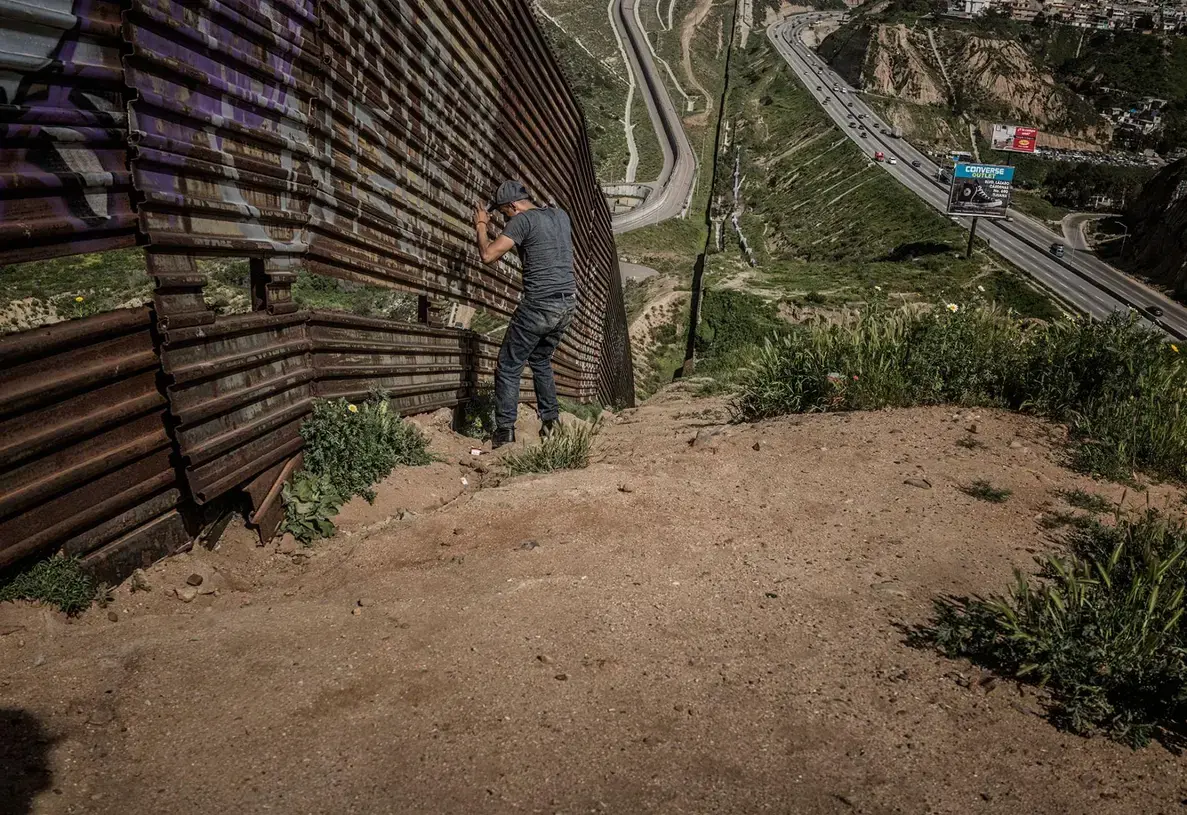
Figure 3. Militarised border between North and South Koreas, at Panmunjom
Despite the 13th Article of the “Universal Declaration of Human Rights” (1948) affirming that “Everyone has the right to freedom of movement and residence within the borders of each State”, negative attitudes, as mentioned above, hinder the social inclusion of immigrants and refugees and impede the development of their sense of belonging to the community.
Do you imagine the profound impact of leaving behind and giving up everything you have built in your life? What emotions would this invoke?
To gain insight into the experiences and emotions of refugees, consider watching “Cruzar un muro”, a short film depicting refugees’ sailing experiences. Reflecting on these experiences underscores the importance of breaking down borders to actualise this fundamental right and provide hope, enabling individuals to perceive the world as their home.
Within the context of a local border living experience, individuals often grapple with their “border identity” in an internal and dilemmatic way. In her poem “To live in the borderlands”, Gloria Anzaldúa delves into her mestiza heritage and identity shaped by the experience of residing on the Mexico-USA border. She reflects on the intricacies of navigating the multiple voices of her ancestors, who share a history marked by conflict in that particular space.
For a more profound understanding of space, it is crucial to consider its “plasticity” (Jones, 2022; Malabou, 2008), i.e., the capacity to adapt to the multiple influences in a physical space (e.g. political, social, historical), while simultaneously resisting change. Malabou (ibidem) highlights the material world as a product of a time-space continuum marked by tensions between transformative and fixity forces. Taking this into consideration, as well as the impact of linguistic programmes and policies on identity (McKinney, 2017), we can either contribute to reinforcing the system in a functional way or to resistance. In the face of the complexity associated with new demographics, it becomes imperative not only to discuss the coexistence and contact between different languages and cultures in these spaces (Saraceni & Jacob, 2018) but also to reflect on the dynamics and cross-linguistic borders in contexts of linguistic and cultural diversity.
Contrary to the prevalent paradigm of borders as “separating marks” (Morello, 2017), they can also be viewed as spaces of contact, encounters, sharing and opportunities. Figures 4 and 5 illustrate this fact: the first focuses on humanitarian aid at the Poland-Ukraine border, while the second highlights a couple at the Switzerland-France-Germany border.
Figure 4. Humanitarian aid at the border Poland-Ukraine
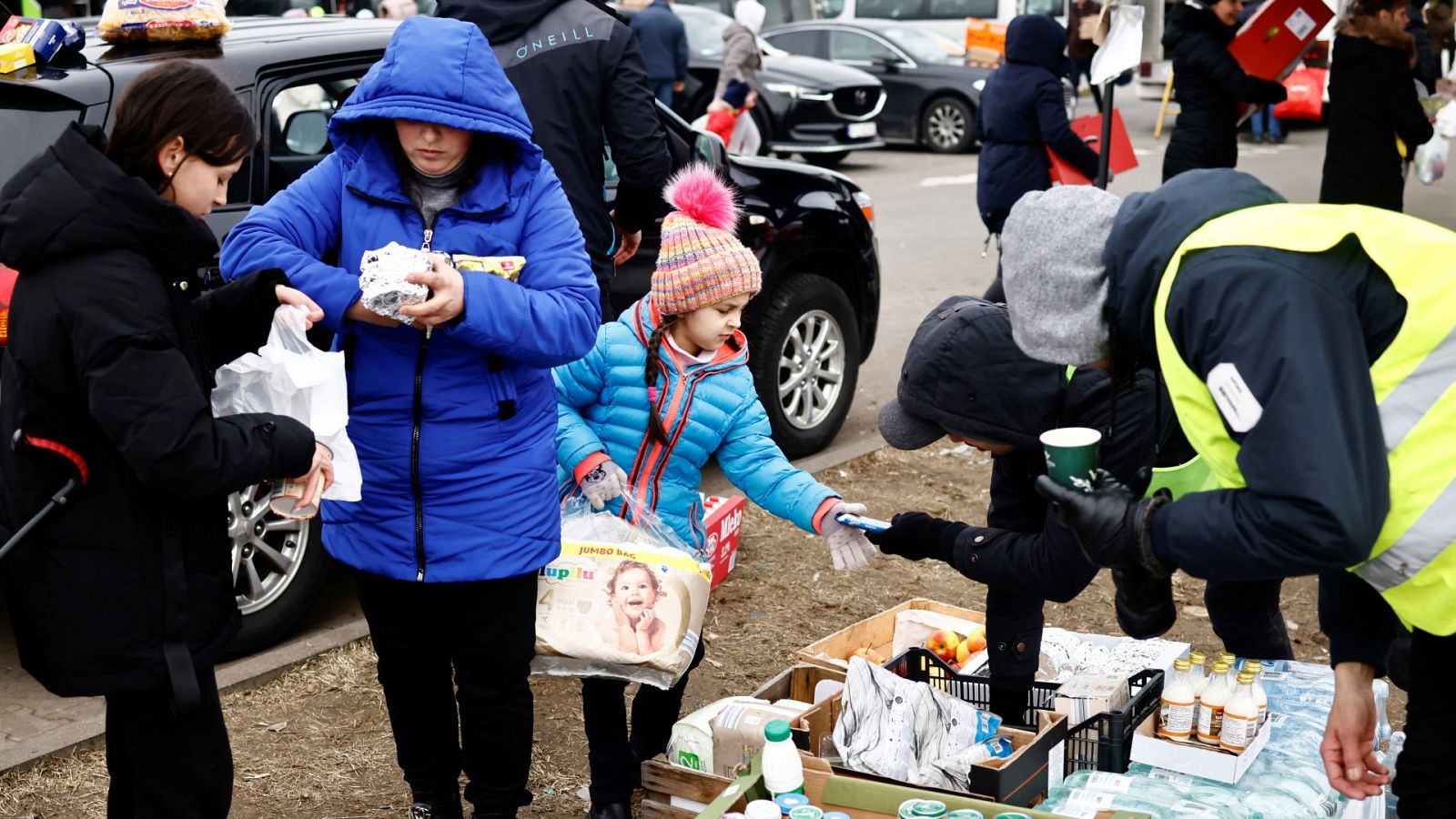
Figure 5. Lovers at the border Switzerland-France-Germany

In line with the above, we present two testimonies of Portugal-Spain border locals, extracted from the documentary “Portunhol” (Martins, 2022). These testimonials emphasise the “vivência universalista” [universalist living] (ibidem), an experience characterised by contextual linguistic and cultural diversity within a global citizenship perspective. In this perspective, boundaries fade away, creating an environment where the richness of diversity is felt without constraints:
Testimony 1 – “Até à pandemia, não tínhamos dado conta de que havia uma fronteira. Para nós, era uma linha imaginária, eram dois países, sim, mas nunca tínhamos percebido os inconvenientes que isso trazia” [Until the pandemic, we had not realised that there was a border. For us, it was an imaginary line, two countries, yes, but we had never realised the inconveniences it brought.] |
Testimony 2 – “É incrível, porque as pessoas que vêm de fora não têm noção que é uma coisa tão natural para nós, que é tão perto, e que uma curva está a dividir Portugal de Espanha” [It is incredible, because people coming from outside have no idea that it is such a natural thing for us, that it is so close, and that a mere curve is what divides Portugal from Spain.] |
The same nation-state border can also be experienced in different ways in distinctive regions. Take, for example, the Vilar Formoso-Quadrazais border, situated in a Portuguese region along the Portugal-Spain border (figure 6 below). Locals there co-created a linguistic code known as “gíria quadrazenha”, which is comprehensible only among themselves. This code was specifically devised to speed up the organisation of smuggling, which has a historical tradition in that region, and to impede understanding by outsiders, especially the police. This scenario vividly evidences the role of languages as social, existential and intercultural experiences.
Figure 6. Vilar Formoso-Quadrazais border

To preserve the linguistic and cultural diversity of the Argentina-Brazil-Paraguay triple-border, the subversive group of intellectuals “Portunhol Selvagem” created “portuñol” as a type of translanguaging practice. Douglas Diegues, a member of the group, authored several poems that lead us to a paradigm of conceiving art as a sociolinguistic intervention to empower the languages spoken in that region. In this sense, languages are permeable and fluid entities that can blend on both an individual and micro plan (self-management of the communicative repertoire of individuals) and on a social, relational, and macro level (in multilingual and multicultural contexts). This blending can lead to a border experience as a “sociophysical” space of alternative conviviality.
In conclusion, while borders share common characteristics, such as linguistic and cultural diversity and space plasticity, they also possess idiosyncrasies provided by geopolitical, historical and social variables, making each border contextually unique and singular in its pluralities. However, as we saw, those pluralities are not always seen and lived in a positive way, compromising the sustainability of our societies. As educators, our role is to contribute to linguistic and cultural diversity education, specifically in nation-state and regional borders, to empower future teachers as active agents in transforming borders as “third spaces” (Bhabha, 1994) of human existence and shared experiences.
Unit 2. Living in or between borders: challenges and opportunities
Unit 1 revealed the existence of different types of borders, ranging from formal territorial ones designated as dividing lines, subject to state surveillance and control, to geopolitical borders shaped by political, economic, and commercial logics. Additionally, symbolic and linguistic borders were also considered. These guide social, cultural, and identity flows in various domains, engaging in constant negotiation. Beyond geographical limits or fixed bridges connecting territories, it can be asserted that these flows delineate what we refer to as symbolic borders.
In Unit 2, we delve deeper into the multifaceted nature of borders, which overlap in their geopolitical, social, linguistic, and cultural, and human dimensions. These borders constitute comprehensive, more or less tangible, and palpable space-times, serving as stages for various social practices and discursive patterns. These practices and patterns are sometimes contradictory, dualistic, and differentiating, influencing the meanings we attribute to borders, both ours and others’. Moreover, they shape how we experience the challenges and opportunities of living in or between borders.
And in the end, what are these challenges and opportunities?
To ponder on this theme, we turn to literature, which metaphorically plays a crucial role in helping us evaluate and deeply understand the nuances of reality. Through literature, we may transition to a more objective reality, which allows for the apprehension of various perspectives and human experiences through the voices of those who inhabit the reality of borders, specifically the Brazil-Uruguay border.
By the end of this unit, you will be able to:
- expand your understanding of the concepts of symbolic and linguistic borders;
- identify different types of challenges and opportunities of living in these borders;
- recognize linguistic and cultural diversity, both as a challenge and as a resource, when living in border regions.
2.1. (Re)Discovering our borders
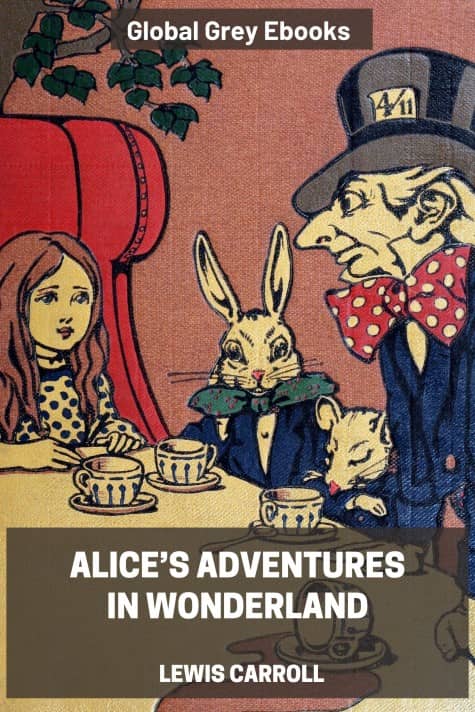
Nota. Cover image from Global Grey Ebooks, based on the public-domain edition of Alice’s Adventures in Wonderland (Lewis Carroll, 1865)
It is possible that you are familiar with or have heard of Alice, the character from Lewis Carroll’s literary work ‘Alice in Wonderland‘. Yes, indeed, she is the bored young girl who, driven by curiosity, followed a hurried rabbit, leaned over its burrow, and fell, fell, fell, until landing in an extraordinary world, contrary to everything she knew and considered conventional.
Alice was beginning to get very tired of sitting by her sister on the bank, and of having nothing to do […] when suddenly a White Rabbit with pink eyes ran close by her.
There was nothing so very remarkable in that; nor did Alice think it so very much out of the way to hear the Rabbit say to itself, ‘Oh dear! Oh dear! I shall be late!’ (when she thought it over afterwards, it occurred to her that she ought to have wondered at this, but at the time it all seemed quite natural); but when the Rabbit actually took a watch out of its waistcoat-pocket, and looked at it, and then hurried on, Alice started to her feet, for it flashed across her mind that she had never before seen a rabbit with either a waistcoat-pocket, or a watch to take out of it, and burning with curiosity, she ran across the field after it, and fortunately was just in time to see it pop down a large rabbit-hole under the hedge.
In another moment down went Alice after it, never once considering how in the world she was to get out again. (Carrol, 2022, p. 4-5)
This episode represents only the first of many borders crossed by the protagonist along unimaginable and intriguing paths, making her oscillate between the desire to return home and the curiosity to remain and unravel the surrounding strangeness. This journey leads her to dreamlike spaces and encounters with eccentric creatures that challenge her understanding of the world and herself. Alice realises that she is facing a unique opportunity and reflects upon it:
‘It was much pleasanter at home,’ thought poor Alice, ‘when one wasn’t always growing larger and smaller, and being ordered about by mice and rabbits. I almost wish I hadn’t gone down that rabbit-hole—and yet—and yet—it’s rather curious, you know, this sort of life! I do wonder what can have happened to me! When I used to read fairy-tales, I fancied that kind of thing never happened, and now here I am in the middle of one! (Carroll, 2022, p. 22).
Thus, Alice’s journey symbolises the complexity of the human experience, often marked by the duality between boldness and hesitation, aspects that intertwine in the narrative web of Wonderland.
Through reading the book with Alice, we learn that questions play a crucial role in the processes of seeking (self)knowledge. They are important tools to stimulate critical thinking and enable the (de)construction of (pre)conceptions, as they guide us to our internal world and allow a deeper understanding of who we are in relation to the world and the people who inhabit it – both influencing and being influenced by it. This contributes to the (re)discovery of our own borders.
In this sense, we need to enhance our ability to understand and respect others’ perspectives, experiences, and values. It is essential to move towards the Other, entering their existential space-time, to recognise and appreciate the diverse coexisting realities that also find expression within us. That is, to exercise “the appreciation of the diverse diversities of the self and the other” (Dervin, 2010, p. 157). Thus, placing ourselves in Alice’s shoes represents, potentially, a fruitful exercise in alterity and empathy.
Would you be capable of such a feat? How would you feel if, suddenly, you found yourself at a crossroads, confronted by an enigmatic cat with a broad and perpetual smile, reciting bewildering and philosophical advice?
That’s what happened to Alice at a certain point in her pilgrimage:
— Cheshire Puss, she began, rather timidly, […] would you tell me, please, which way I ought to go from here?
— That depends a good deal on where you want to get to,’ said the Cat.
— I don’t much care where — said Alice.
— Then it doesn’t matter which way you go, said the Cat.
— So long as I get somewhere,’ Alice added as an explanation.
— Oh, you’re sure to do that,’ said the Cat, ‘if you only walk long enough. (Carroll, 2022, p. 42)
This passage suggests the importance of having clarity regarding our goals and destinations when making decisions since the path to follow naturally depends on the place or what we wish to achieve. However, unlike Alice, who chose to live her adventures, expressing indifference about the direction to take, many of us, at times, may not be as fortunate; we don’t have the opportunity to choose our destinations, which simply unfold before us. Driven by our instincts, desires, or needs, we are led, for reasons beyond our control, to places never imagined.
In an exercise of empathy, have you ever imagined yourself in the shoes of an immigrant? For instance, in the position of a war refugee, where the lack of control over one’s destiny is a stark reality and the absence of true choices prevails?
Often, the priority is simply to find a safe place, regardless of how uncertain or challenging the path may be. Yes, when crossing borders of any kind, it is common to be engulfed in fear and uncertainty; it is in those moments that our vision can become obscured when confronting the unknown, as demonstrated in this next episode.
The players all played at once without waiting for turns, quarrelling all the while, and fighting for the hedgehogs; and in a very short time the Queen was in a furious passion, and went stamping about, and shouting ‘Off with his head!’ or ‘Off with her head!’ about once in a minute. Alice began to feel very uneasy: to be sure, she had not yet had any dispute with the Queen, but she knew that it might happen any minute, ‘and then,’ thought she, ‘what would become of me? They’re dreadfully fond of beheading people here; the great wonder is, that there’s any one left alive!’ (Carroll, 2022, p. 55)
Immersed in a threatening environment, Alice maintains serenity and assesses the situation, anticipating potential conflicts. Through observation, she devises strategies and strives to prevent fear from subduing her, highlighting that many borders often prove to be hostile and challenging, demanding resilience, calmness, and rationality in moments when we simply aim to feel welcomed.
As she continues her adventures, Alice underscores the importance of internal and external dialogue in constructing a more comprehensive and inclusive understanding of the world and ourselves. Her journey through various symbolic borders highlights the complex process through which we delineate our identity, on the border of the possible, in the transition to becoming who we are. Thus, Alice did not pause before eccentric conversations and transformative rituals. She remained continually open to exploration and questioning, available for dialogue and interaction with others, no matter how strange they might seem. Faced with each new experience, a persistent question guided her: Who am I?
“Who am I then? Tell me that first, and then, if I like being that person, I’ll come up: if not, I’ll stay down here till I’m somebody else”—’but, oh dear!’ […] I am so very tired of being all alone here!’ (Carroll, 2022, p. 11)
‘Who are you?’ said the Caterpillar.
This was not an encouraging opening for a conversation. Alice replied, rather shyly, ‘I—I hardly know, sir, just at present—at least I know who I was when I got up this morning, but I think I must have been changed several times since then.’
‘What do you mean by that?’ said the Caterpillar sternly. ‘Explain yourself!’
‘I can’t explain myself, I’m afraid, sir’ said Alice, ‘because I’m not myself, you see.’ ‘I don’t see,’ said the Caterpillar. ‘I’m afraid I can’t put it more clearly,’ Alice replied very politely, ‘for I can’t understand it myself to begin with; and being so many different sizes in a day is very confusing.’ (Carroll, 2022, p. 28-29)
Certainly, Alice transcended successive borders. In seeking an exit, she embarked on journeys that were not merely physical transitions from one place to another but rather encounters with the diversity within herself. This represented a unique opportunity for growth through the exploration of an unknown world that she so eagerly sought to understand.
Have you ever considered how many moments in your life you’ve reflected on who you are and what you truly want? Have you had unexpected encounters or interactions that challenged all your expectations? How did you respond to that feeling? Have you ever felt alone and lost? What strategies or approaches did you use to overcome these feelings?
The dialogues between Alice and the fantastical characters highlight, among other issues, the challenge of establishing communication between different forms of existence, a cross-border communication. However, the essence of her journey has always been the pursuit of self-knowledge in and through herself, in the other, and through the Other, without prejudice or judgement, in motion, creating dynamics to overcome the challenges we all face when crossing borders in the construction of our identities, in the dialectics of “I-We” (Dubar, 2006). We believe that this represents the significant opportunity to live between borders, possibly the most crucial for our humanisation—an opportunity inherently linked to the dimension of self-awareness, a sense of belonging, and acceptance of the Other in interaction and intersubjectivity.
And you, what do you think about this?
2.2. Beyond symbolic borders: voices of uruguayan Portuguese speakers
Alice’s symbolic borders mirror the diverse realities of the geographical borders scattered around the world and the complex and sometimes disturbing ways of being and feeling of the inhabitants of these regions. In this instalment, we’ll take you to a border located in Latin America where an oral variety of Portuguese is spoken: Uruguayan Portuguese.
This dialect is spoken on the Uruguay-Brazil border. It is a local variety within a diglossic sociolinguistic context. In other words, the sociolinguistic reality in the departments of this strip (Artigas, Rivera, Cerro Largo and Rocha) is characterised by social bilingualism: the communities understand and communicate in the two border languages, Portuguese and Spanish, but these languages take on different social roles. In fact, while Spanish is considered the language of prestige, the vast majority of Portuguese speakers speak a local variety that is strongly stigmatised in social terms (Carvalho, 2007).
This diglossic situation can be explained by the historical trajectory of these languages. As several linguists attest, Portuguese was the only language spoken in border communities until the end of the 19th century, when Spanish entered the region (Barrios, 2018; Brovetto et al., 2007; Carvalho, 2003; Elizaincín & Behares, 1981). Since language is power, the linguistic policies of José Pedro Varela, a Uruguayan politician, writer and journalist in the 19th century, imposed one nation-one language: Spanish.
- “Quando chega gente de fora em casa a gente fala uruguaio, não sei porquê, mas depois já empeza a rotina de volta, falamo brasileiro” [“When people from abroad come to our house, we speak Uruguayan, I don’t know why, but then we change the routine back home, we speak Brazilian”], says a 19-year-old student (Carvalho, 2007, p. 56).
Another teenager, aged 17, said
- “Cuando mi novio y yo empezamos a salir hablamos sólo uruguayo, después con el tiempo fuimos empezando a hablar brasilero y hoy sólo hablamos brasilero” “When my boyfriend and I first started dating we only spoke Uruguayan, then over time we started speaking Brazilian and today we only speak Brazilian”][(Carvalho, 2007, p. 55).
In geographical terms, Uruguayan Portuguese is more prevalent among people on the outskirts of urban centres and in extensive rural regions. “Nos bairro a gente fala português, no centro não” [“We speak Portuguese in the neighbourhood, but not in the centre”], says a 9-year-old child (Carvalho, 2007, p. 54). Uruguayan Portuguese is therefore a linguistic variety that is doubly minorised and peripheral: it is spoken mainly by rural speakers or those from the outskirts of urban centres, which are generally populated by people with low economic resources.
Despite being a language of solidarity and social unification, which unites and identifies Uruguay’s border culture, Uruguayan Portuguese is socially discredited, with negative effects on its vitalisation and consequences in terms of linguistic and social discrimination against those who speak it, and family language policies, where parents only communicate in Spanish with their children, leading to linguistic behaviour that assimilates the prestigious language: “Eu não deixo minhas filhas falar português comigo. Eu falo brasilero com o meu pai mas cambeo pro uruguaio pra falar com as gurisa” [“I don’t let my daughters speak Portuguese to me. I speak Brazilian with my father, but I switch to Uruguayan to talk to the children”], says a 35-year-old woman from Rivera (Carvalho, 2007, p. 61).
Uruguayan Portuguese is known and recognised by its speakers as portunhol/portuñol, entreverado, bayano, fronteirizo, brasilero, who, sometimes with shame, sometimes with pride, highlight a particular feature of the border identity of these Uruguayan citizens: “Nem que nós queira falar em espanhol não nos sai bem porque nós falemo portunhol.” [“Even if we want to speak in Spanish, we won’t do well because we speak Portunhol.”] (Doris, in Vozes das Margens – Avance Documental).
Based on the work in progress of the documentary “Vozes das Margens” (Voices from the Margins), directed by Ana Maria Carvalho, we will travel through the voices of Uruguayan Portuguese speakers who express identity constructions and feelings similar to our Alice in Wonderland. In this way, the symbolic boundaries of a literary reality meet and merge with a very contemporary reality in the north of Uruguay.
How would you feel if, suddenly, you found yourself at a crossroads?
Crossroads are geographical and/or symbolic spaces that lead to new paths, but also to many hesitations and doubts. Faced with a crossroads, we are urged to make decisions. Many of these decisions are reflected in behaviour that, for different reasons, takes us away from paths that bring us closer to other people from different contexts and realities. Let’s take a look at the following voices:
“Eles dizem ‘aquellos de la frontera’” (Sandra) “Depois que eu falo dizem ‘sos brasilero’ e eu digo ‘não, cresci na fronteira pero não sou brasileiro’” (Arturo) “Em Montevideu me chamavam a canária. Meus tios me levavam. Havia uns gallego. Eu tampoco entendia o que eles falavam. Me dava má impressão porque eles me estavam chamando a canária, palavra meia feia, não sei, talvez me chamavam que eu não tinha valor nenhum” (Eva) “They say ‘those from the border’” (Sandra) “After I speak they say ‘sos brasilero’ and I say ‘no, I grew up on the border but I’m not Brazilian’” (Arturo) “In Montevideo they called me the Canary. My uncles took me. There were some Gallego people. I didn’t understand what they were saying either. It gave me a bad impression because they were calling me the Canary, a kind of ugly word, I don’t know, maybe they were calling me worthless” (Eva) |
These voices of frontier speakers of Uruguayan Portuguese show behaviours that are different from those of Uruguayan speakers from the south, who identify those from the north as Brazilians or from a socially peripheral space within the Uruguayan nation: “aquellos de la frontera”. But who are these border people?
Who am I ?
Feeling that they speak a socially marginalised language that is not considered by the majority of the population to be a national language, but which is their language, Uruguayan Portuguese speakers live at a constant crossroads, a crossroads that manifests itself in the way they see this (their) border identity space.
“Falemo misturado, algo nosso” (Beetoven) “Eu sei que sou uruguaio, mas bueno nasci assim vou morrer assim” (Ezequiel) “Eu e o marido fomos criados falando portunhol e seguimos falando até hoje portunhol” (Teresita) “Não me vejo falando em uruguayo, não me vejo o dia a dia uruguayo. Eu acho que sou assim. Isso já vem do pai, da mãe, do avô, da avó. Eu acho que já vem deles. Eu acho que herdei isso deles” (Ana) “Let’s talk mixed, something of ours” (Beethoven) “I know I’m Uruguayan, but bueno I was born this way and I’ll die this way” (Ezequiel) “My husband and I were brought up speaking Portunhol and we still speak Portunhol today” (Teresita) “I don’t see myself speaking in Uruguayan, I don’t see myself everyday Uruguayan. I think I’m like that. It comes from my father, mother, grandfather and grandmother. I think it comes from them. I think I inherited it from them” (Ana) |
Ana, Teresita, Ezequiel and Beethoven awaken us to their hybrid reality, of something mixed but deeply their own. As well as being a heritage language, passed down from generation to generation, these voices also emphasise that speaking Uruguayan Portuguese, their mother tongue, implies a way of seeing and being in the world.
What would it be like if we were forbidden to speak our mother tongue? What realities would be consigned to oblivion? Who would we be, anyway?
Throughout their lives, Uruguayan Portuguese speakers are victims of discrimination, which is particularly evident when they start school. At school, not only do many teachers not understand their language, but they are also subjected to situations that we now identify as bullying.
“É comum que se riam, que se burlem, que notem, que percebam essa diferença mas que atribuam a ela um caráter negativo” (Jorge) “Às vezes no tempo de liceu se riam e diziam campañola porque estava falando alguma palavra mas eu não dava a importância mínima. Eu deixava quieto seguia falando” (Teresita) “Eu na escola aí também falava este idioma, nomá, e em espanhol muy difícil, eu sabia as perguntas, sabia fazer, levantava a mão, mas todos queriam que eu falasse em espanhol, mas eu não falava e ficava quieto, nomá, na minha. Eu queria falar no meu idioma” (Ezequiel) “It’s common for people to laugh, to make fun of it, to notice it, to realise this difference but to attribute a negative character to it” (Jorge) “Sometimes in high school they laughed and said campañola because I was saying something, but I didn’t give a damn. I kept quiet and carried on talking” (Teresita) “At school I also spoke this language, nomá, and in Spanish it was muy difficult. I knew the questions, I knew how to ask them, I raised my hand, but everyone wanted me to speak in Spanish, but I didn’t and I kept quiet, nomá, in my own language. I wanted to speak in my own language” (Ezequiel) |
The discrimination to which they are subjected sometimes leads to feelings of fear and insecurity: Ezequiel wouldn’t take part in lessons because everyone wanted him to speak Spanish, but he just wanted to speak his own language, as did Teresita, who resiliently continued to speak her mother tongue regardless of the jokes and laughter of her schoolmates.
In an exercise of empathy, have you ever imagined yourself in the shoes of Ezequiel, Jorge and Teresita? How would you feel about the behaviour of others? How would you act?
There are many individual and social consequences for those who speak Uruguayan Portuguese:
“Posso falar bem ou posso falar mal porque eu não sei falar bem” (Sandra) “Eu acho que falar bem sempre o uruguayo eu acho que não vou poder falar” (Ana) “Tem niños que falam o portunhol e tem niños que falam o espanhol, porque já ensinam nas casas que eles têm de falar em espanhol” (Teresita) “I can speak well or I can speak badly because I don’t know how to speak well” (Sandra) “I don’t think I can always speak Uruguayan well” (Ana) “There are children who speak Portunhol and there are children who speak Spanish, because they’re taught in their homes that they have to speak in Spanish” (Teresita) |
As a result of discriminatory situations, speakers feel that they don’t speak well and that they live at the crossroads of linguistic insecurity, both in relation to their mother tongue and in relation to Spanish. What’s more, since they don’t want their children to go through the same experiences, they only communicate with the younger generations in the language of prestige.
To survive the Borderlands you must live sin fronteras be a crossroads.
Living on Uruguay’s borders proves to be an intrinsic challenge, but also a unique opportunity for its inhabitants. Just as Alice’s adventures in Wonderland led her to face challenges that moulded her journey, life on Uruguay-Brasil’s symbolic borders requires courage and resilience. However, it is in this multifaceted context, where Uruguayan Portuguese creates a unique web of cultural identity, that we find a unique opportunity to preserve, celebrate and enrich a narrative that is drawn at the intersection of different languages and cultures. Faced with linguistic stigmatisation, the inhabitants of these borders have the chance to reaffirm their cultural uniqueness, turning challenges into opportunities to strengthen and build a rich and valuable collective identity.
Unit 3. Borders as a linguistic, cultural and human experience
In the previous unit, we explored the concept of borders through the exploration of two distinct types: Alice’s personal borders and the geopolitical boundaries of the Uruguayan-Brazilian border. Building on this foundation, our journey into the intricacies of borders continues and expands in this unit.
Throughout this unit, you will immerse yourself in a diverse range of daily, professional, and aesthetic experiences encountered by individuals inhabiting border regions. These narratives will provide you with valuable insights into the complexities of daily life, the dynamics of professional pursuits, and the nuances of aesthetic expression within these vibrant and dynamic spaces. Get ready to explore and gain a deeper understanding of the multifaceted experiences that define life in and around borders.
By the end of this unit, you will be able to:
- participate in, observe, and reflect upon the myriad daily, professional, and aesthetic experiences that define life in border regions;
- gain a deeper appreciation for the diversity that characterises these areas and the multiple forms inhabitants interact and live;
- recognise borders as creative spaces;
- challenge preconceived notions as you explore borders not as mere geographical lines but as creative spaces where unique identities and cultures intersect and emerge;
- understand the potential for creativity and innovation that arises from the confluence of different linguistic and cultural words.
3.1. Journeying through borderlands
In this section, you will explore diverse border regions as we introduce you to a curated selection of resources from different border regions. It offers a window into the unique cultural and linguistic dynamics of various borderlands. From the ebb and flow of daily life to the nuances of professional and aesthetic experiences, these resources provide a lens through which you will explore the interconnected tapestry of language, culture, and education.
So, let’s begin our exploration, delving into the vibrant stories and perspectives woven into the fabric of the Uruguayan-Brazilian border, as illustrated in figure 6 below.

In unit 2, we explored this border through Vozes das Margens (Carvalho & Machado, 2023). It unfolds a narrative of discrimination, exclusion, and marginalisation, with language as the initial focal point extending to encompass various facets of human experience, such as poverty, distance, and decentralisation. We commence our journey through borderlands on the same border. The Uruguayan writer Fabian Severo contributes to the discourse by crafting works in portunhol. In his book Noite nu Norte (2010), we find his poem Trinticuatro, which delves into conflicts arising from using his language in an educational setting. As an exercise, read the poem while keeping in mind how this multifaceted exploration invites us to consider the complexities of language, identity, and education in the Uruguay-Brazil border region.

Now, shifting our focus to the Portuguese-Spanish border (figure 7), which has maintained an almost identical demarcation since the establishment of the Treaty of Alcañices in 1297, marking over 800 years of continuity. Remarkably, it stands as the longest uninterrupted border within the European Union, having been free of border control since March 26, 1995, following the Schengen Agreement’s implementation, which abolished internal borders, creating a passport-free zone in Europe.
We commence embarking on an educational project that fosters a collective, creative, and trilingual experience:
The Ponte…nas ondas! (PNO!) project aims to safeguard the intangible cultural heritage on the Portuguese-Galician border by creating spaces in which heritage can be practised and transmitted to younger generations. Initially developed in schools of the municipalities of Salvaterra de Miño (Spain) and Monção (Portugal), the project later spread to many other schools and institutions. More recently, this living heritage has been studied and analysed for educational purposes by teachers and researchers from PNO! association, with the support of tradition bearers, practitioners and specialists from universities in the region.
The PNO! project has allowed young people to get involved in the practice and transmission of their own traditions thanks to the dissemination of cultural heritage in schools, the training of teachers, the presence of bearers and practitioners in classrooms to share their knowledge and experience, and the use of information and communications technology and radio resources to transmit, promote and enhance the shared intangible cultural heritage (https://ich.unesco.org/en/BSP/portuguese-galician-border-ich-a-safeguarding-model-created-by-pontenas-ondas-01848).
As part of your learning journey, we invite you to watch this video, which provides additional insights into the project. Consider the following reflection point: How does involving pupils in the practice and transmission of their own traditions enrich their education? Reflect on the impact of this interactive and communicative experience across the border for participants. Watch the video: Portuguese-Galician border ICH: a safeguarding model created by Ponte…nas ondas!
In 2023, the Portuguese public service broadcasting organisation, RTP, aired a documentary series titled “Portunhol,” which portrays the Portuguese-Spanish border as a nexus for the development of economic, social, and cultural cohesion, by the presentation of a serie of of testimonies that “dissolve borders”:
A seven-episode documentary series about sister lands on the oldest border in Europe: The Luso-Spanish border. The distance between what is gained, what is spent, what is eaten, what is slept (viva la siesta), but also how both cultures blend beyond the invisible line that separates the two countries. The border of sweets, the border of cheaper gasoline, the border of wars and peace treaties, the border of smuggling, the festive border. We travel from North to South in search of stories that dissolve borders. In Portunhol. (From: https://www.rtp.pt/programa/tv/p44623)
As part of your exploration, we invite you to dive into the series trailer for an enticing glimpse into the rich narratives that unravel along the Portuguese-Spanish border. After watching, consider reflecting on the following aspects:
- How the series portrays the interplay of cultures and its impact on the development of economic, social, and cultural ties between these sister lands.
- The title of the series, Portunhol. It is the same word we encountered in the context of the Uruguayan-Brazilian border. Explore how its use differs here and whether it carries the same meanings.
Watch the series trailer here.
Venturing beyond the visual realm, we encounter the musical project “Músicas da Raya,” which stands as an ambitious and innovative cross-border initiative. This project features compositions from both sides of “La Raya” (the border) between Spain and Portugal, creatively reimagined and presented with a universal perspective. Prepare for a comprehensive journey through the instrumental and vocal melodies of La Raya, immersing yourself in live presentations, songs, and insightful interviews available in the playlist: https://www.youtube.com/playlist?list=PLv0PAUpN5ftgxA-UoJ5u1lAY6uYWgcJpT
Now, we will explore in more detail deeper into the impact of this musical venture. After listening to the captivating melodies, watch this interview and ponder on the following questions: What is the importance in our hyperconnected societies to keep in touch with local traditions? This interview vividly illustrates the project’s reach, touching the lives of both school children and the elderly. Consider how these two distinct groups are influenced and impacted by such a project.

The unit has hitherto showcased examples from international border regions. However, it’s crucial to acknowledge that linguistic border regions can also manifest within a single country, as exemplified by Belgium (see figure 8). The country boasts three official languages—Dutch, French, and German—leading to the delineation of four language areas within three regions:
- Flanders: Where Dutch is the official language.
- Wallonia: Comprises the French and the German language areas.
- Brussels: Both Dutch and French are official languages.
Significantly, Brussels, functioning as the sole bilingual region, stands as an enclave within Flanders, creating a language border region around it. For a deeper understanding and additional insights into this language border, known as the Vlaamse Rand, please refer to the information available here.
These intricate linguistic arrangements give rise to situations that are fascinating yet challenging, and potentially perplexing for visitors and newcomers. An illustrative instance is this brochure, developed by a non-profit organisation. Designed to acquaint newcomers with the linguistic specificities of the region, the brochure provides essential support for navigating life in de Rand.
As you engage with these resources, reflect on the multifaceted nature of linguistic borders within a single country. Consider how these linguistic intricacies contribute to the richness and complexity of cultural and daily interactions in Belgium, drawing parallels to your home nation. Explore the dynamics of linguistic borders in your own or nearby countries, taking into account the unique situations and influences at play.
3.2 Cultural confluences: artistic ventures across borders
Borders serve as conduits for the flow of culture, knowledge, diverse experiences, and artistic expressions. This dynamic interplay also fuels other initiatives that view languages as integral facets of human experience. Let’s delve into a series of examples as we explore the profound intersections of art and language in diverse border regions.
We start with “Se a pele é fronteira, o corpo é território” (“If the skin is a border, the body is a territory” ). A presentation of works and projects from the artistic residency titled “If the skin is a border, the body is a territory,” was conducted by schools in Elvas, Portugal, near the border with Spain near Badajoz. The initiative, supported by the National Arts Plan and the Organization of Ibero-American States for Education, Science, and Culture (OEI), involved collaborative efforts with the cultural association UMCOLETIVO. The event highlighted the active participation of students and collaboration between schools in Elvas (PT) and Badajoz (ES), emphasising the circulation of artists and artistic objects with connections to Portuguese and Spanish languages. The project aimed to bring the Portuguese experience to other Ibero-American countries. The cultural initiative included labs exploring the philosophical, physical, and cultural dimensions of borders, engaging the entire school community. UMCOLETIVO focused on juxtaposing individuals and territory, exploring the transformative relationship between the body and the landscape as a metaphor for the skin and the border. Activities such as “Representations of the Invisible,” Arts Clubs, Monologues, Dialogues, musical performances, and storytelling sessions were carried out from April to June 2021. The session concluded with the screening of the short film “Trova da Outra Margem do Tempo,” based on a smuggling story in Elvas, followed by discussions with the inspiring figure from the film. More information can be found in Portuguese and Spanish here.
To learn more, you can engage with the activities detailed in this article and in this documentary. Now, as you explore these resources, consider the transformative power of art in challenging and redefining borders. Reflect on how initiatives like this one foster collaboration, cultural exchange, and understanding among younger generations across linguistic and geographical divides. Moreover, ponder the ways in which artistic engagement enriches the educational experience and promotes unity among students from both sides of a border.

In the same perspective of borders as conduits for the flow of culture, knowledge, and artistic expressions, let’s shift our focus to yet another border region, specifically in Central Africa, exploring the boundary between northern Zambia and the southern Democratic Republic of Congo, illustrated in figure 9. The article “Artistic Movements: Visual Arts and Cross-Border Exchange on the Central African Copperbelt” by Enid Guene sheds light on the evolution of visual arts in the Central African Copperbelt region from 1966 to 1977, a period marked by relative tranquillity and prosperity. The author delves into the distinctions between the art produced during this timeframe and that of the colonial era, interpreting the explosive development of popular painting as a sign of the emergence of a new historical consciousness among the masses, within the backdrop of the increasingly authoritarian Mobutu regime.
Key points from the article include:
- The art of this period was seen as a clear break from the art of the colonial period, leading to the definition of “popular painters” by the Zairian International Association of Art Critics (AICA). These painters did not attend art school, used cheap materials, and sold their art on the streets, distinguishing them from “academic painters” who received formal artistic education and displayed their art in galleries.
- The line between popular and academic painters was often blurred, as artists of all kinds attempted to access different markets – for gallery art and street art. The testimonies of artists active during the Mobutu, former President of the Democratic Republic of the Congo, period suggest that they often tried to navigate both worlds.
- The article also discusses the impact of the Mobutu regime on the arts, as well as the role of art in the context of the increasing authoritarianism of the regime.
Now, as you reflect on the intricate interplay of politics, society, and artistic expression in this Central African border region, scrutinise the challenges faced by artists manoeuvring through an evolving landscape under an authoritarian regime. The full article awaits your exploration here, offering a nuanced perspective on the development of visual arts during this transformative period that transcended borders.
3.3. Border creation and language affirmation
Have you ever pondered that a border might have the power to create a “new language”?
Envision a scenario where a part of a country gains independence. In this newly formed nation, picture the language spoken, identical to that of the first country, being renamed, and voilà —a “new” language emerges. This construction of a new language may seem somewhat delicate and artificial, considering it is essentially the same language from the first country! Fast forward a few decades, and this country declares that their language does not exist. Sounds curious, doesn’t it? Does this narrative sound too extraordinary to be true, or does it ring a bell? Well, it is not a work of fiction; it is based on a real case. Join us now in exploring the intriguing case of the Republic of Moldova and the Moldovan language.

The territory of today’s Republic of Moldova (in figure 10) was part of Romania until 1940, when it was annexed to the Soviet Union. The language spoken in the country was Romanian. But during the Soviet occupation, the use of Russian was favoured.
Despite this, Moldovans persisted in speaking Romanian, a fact convenient for pro-Russians who coined it the “Moldovan language”. Even after the collapse of the Soviet Union in 1990 and the establishment of the modern Republic of Moldova, the pro-Russians in power in Chișinău (the capital of the Republic of Moldova) maintained a language policy that upheld a distinction between Romanian and Moldovan. This even led to the publication of a bilingual Moldovan-Romanian dictionary, which, unsurprisingly, consisted of rarely used or obsolete words (https://www.academia.edu/61824059). A paradox of history indeed!
As political powers shifted, so did realities. Today, with Moldova aligning itself more with the pro-European and pro-union regime with Romania, the linguistic landscape has undergone radical changes. In 2020, the Romanian Academy urged Moldova to stop referring to its language as Moldovan and simply acknowledge it as Romanian. Read about it here. Further, in March 2023, the Parliament of the Republic of Moldova approved a law officially designating the national language as Romanian, thereby, at least on paper, bringing an end to the Moldovan language. Read about this historical development here.
Now, we encourage you to explore this article for a more profound historical background and its connections to the current situation. As you read, consider the profound impact a border can have on languages—whether it’s separating, unifying, or even giving rise to “new” languages.
Unit 4. Language education for social action in border regions
Considering the polysemy of “border” and building upon the challenges and opportunities discussed in previous units related to living in or between borders, along with the diverse experiences encountered by individuals in border regions, Unit 4 shifts its focus to the pivotal role of language education as a privileged stage for fostering social action and promoting linguistic and cultural diversity in these contexts.
Hence, in this unit you will:
- reflect on the purposes and aims of language education;
- analyse the role of supranational institutions in shaping language education policies;
- relate intercultural citizenship education with social engagement and understanding across languages and cultures;
- reflect on the association of language education with service learning as a strategy to enrich language learning experiences and promote cooperation in borders regions;
- analyse examples of language education practices in border regions within a social action perspective.
Unit 4.1. Language education – combining instrumental goals and broader educational aims
The purposes and functions of language education have undergone adaptation to the evolving needs of societies, reflecting changes in the political, economic, technological, and cultural landscapes. While in the last three decades of the 20th century, communication was the primary purpose of language education, with communicative and functional aims justifying its usefulness, in the later part of the 20th century and, more particularly, in the 21st century, language education has been imbued with a political and moral dimension due to the role it plays in “changing societies for the better” (Byram, 2002, p. 45).
Globalisation, technological advancements, and increased international collaboration have significantly impacted language education in recent decades. It is now recognised as playing a crucial role in shaping individuals into effective communicators, culturally aware citizens, and active participants in a globalised world. Hence, nowadays language education reflects the interconnected nature of the world and is linked to objectives and goals related to interpersonal communication, intercultural understanding, democratic global citizenship, social cohesion, and inclusivity. In this context, it is seen as a means to contribute to a more peaceful, fair, democratic, and sustainable world.
Let us explore how this perspective is addressed by supranational authorities such as the Council of Europe (CE), the United Nations (UN), and the United Nations Educational, Scientific and Cultural Organization (UNESCO).
4.1.1. Council of Europe – plurilingual and intercultural education for democratic culture
In Europe, the Council of Europe (CE) has played a significant role in shaping language education policies. Since the 1990s, the CE has developed the concept of plurilingual and intercultural education defined as “an overall linguistic education cutting across all school languages and all subject areas and guided by the values upheld by the Council of Europe… It incorporates all of the languages taught at school into an overall conceptual framework, but does not take the place of the teaching methods specific to each. Plurilingual and intercultural education takes into account the educational and language needs of all pupils, whatever path they are taking through school. It takes the form of an overarching educational project which gives access to all pupils – especially those likely to encounter most difficulty at school – to equity and quality of education” (Beacco et al., 2016, p. 15). Plurilingual and intercultural education, seen as an indispensable factor in the social cohesion of contemporary societies, relies on the concept of plurilingual competence (the ability to use a plural repertoire of linguistic and cultural resources to meet communication needs), and on the concept of intercultural competence (the ability to experience otherness and diversity, analyse that experience and benefit from it).
The CE has been defending plurilingual and intercultural education as a gateway to protect linguistic and cultural diversity and enhance intercultural dialogue, social inclusion and democracy. In this sense, it has issued several recommendations and released several instruments and resources to accomplish these aims. In the Platform of Resources and References for Plurilingual and Intercultural Education, education authorities, practitioners and the general public may access those resources and instruments aimed at supporting the development of plurilingual and intercultural education. One of the CE’s key contributions to language education is the development of the Common European Framework of Reference for Languages (CEFR), which provides a common basis for the elaboration of language syllabi, curriculum guidelines, and assessment instruments across Europe. It has been influential not only in Europe but also globally, serving as a reference point for language education policy and practice. Also important is the Framework of Reference for Pluralistic Approaches to Languages and Cultures: Competences and resources which presents a comprehensive list of descriptors (knowledge, attitudes and skills) considered necessary within the perspective of a plurilingual and intercultural education.
One of the most important recommendations from the Committee of Ministers to Member States regarding plurilingual and intercultural language education is CM/Rec(2022)1 on the importance of plurilingual and intercultural education for democratic culture. In June 2022, the European Centre for Modern Languages (ECML) launched a set of webinars which explain the purposes, principles and measures in this Recommendation. We invite you to take a look at the third webinar, focused on the importance that Recommendation CM/Rec(2022)1 places on teacher education:
Specifically regarding language education in border regions, Recommendation Rec(2005)3 of the Committee of Ministers to Member States on teaching neighbouring languages in border regions was adopted by the Council of Europe on 9th February 2005. The goal is to enhance linguistic and cultural understanding in neighbouring regions where proximity between different languages is a significant factor in fostering cooperation. Hence, it encourages measures to enhance cross-border communication and cooperation, recognising the importance of linguistic competence in achieving these objectives, valuing cultural and linguistic diversity and encouraging the preservation and promotion of regional and minority languages in border regions.
More specifically, Member States are encouraged to:
– develop language teaching programs that focus on the languages of neighbouring countries, considering the linguistic needs of populations in border regions;
– provide appropriate training for teachers involved in teaching neighbouring languages, ensuring they are equipped with the necessary skills and knowledge;
– integrate the teaching of neighbouring languages into national curricula, adapting content to the specific needs and linguistic context of border regions.
This Recommendation meets the content of the Communication Boosting growth and cohesion in EU border regions from the European Commission to the Council of Europe, which highlights the importance of stepping up efforts to promote bilingualism in border regions as a solution to face problematic issues as to individual and business communication and cooperation. On pages 4 and 5 of this Communication, some difficult border life stories are presented. Take a look at them: how do they make you feel? Have you ever thought about the possible difficulties of living in border regions?
4.1.2. United Nations and United Nations Educational, Scientific and Cultural Organization – language education for sustainability, peace, and human rights
The United Nations (UN) and its agency – the United Nations Educational, Scientific and Cultural Organization (UNESCO) – have shown a consistent interest in language education as part of their broader efforts to promote sustainable development, peace, human rights, and cultural diversity. Language education is addressed in different but complementary ways.
The Universal Declaration of Human Rights (UDHR), released in 1948, and the Universal Declaration of Linguistic Rights (UDLR), released in 1996, underline linguistic and cultural diversity as part of human rights, underscoring the right to education in one’s own language, recognising the role of language education in preserving and promoting cultural identity and heritage. Both Declarations also recognise a connection between linguistic and cultural diversity and peace, considering “planetary linguistic peace” as a fundamental factor of social coexistence. The relationship between language education and peace was strengthened with the birth of the so-called “paxlinguistic movement” (Crystal, 2004) in 1987, when a group of UNESCO experts met in the Soviet Union to debate issues related to plurilingual education, originating the Linguapax Kiev Declaration and later, a series of international workshops and conferences focused on this topic.
Although language education is not explicitly singled out in the UN’s 2030 Agenda for Sustainable Development, aspects related to language education can be inferred through broader goals, particularly in the context of quality education, inclusive societies, and global citizenship. Here are some ways in which language education is indirectly present in the 2030 Agenda:
– Quality Education (Goal 4): “Ensure inclusive and equitable quality education and promote lifelong learning opportunities for all.” While the goal does not explicitly mention language education, it is inherent in the idea of quality education. Providing education that is inclusive involves recognising and respecting linguistic diversity, including the importance of teaching (in) the students’ mother tongues or languages that are relevant to their communities.
– Inclusive Societies (Goal 10): “Reduce inequality within and among countries.” Inclusive societies involve recognising and valuing diversity, including linguistic diversity. Education systems that acknowledge and incorporate various languages contribute to more inclusive and equitable societies.
– Global Citizenship Education: The idea of global citizenship education, which involves fostering understanding, respect, and responsibility among individuals in a global context, aligns with the broader goals of the 2030 Agenda. While not explicitly stated, language education is a crucial component of global citizenship, enabling individuals to communicate across cultures, understand diverse perspectives, and engage in global issues effectively.
– Partnerships for the Goals (Goal 17): Goal 17 emphasises the importance of partnerships for the achievement of sustainable development. In the context of education, this could involve collaboration between countries, organisations, and communities to promote language education, linguistic diversity, and inclusive practices.
Hence, while language education is not explicitly named in the SDGs, the principles of inclusivity, equity, and global citizenship that are embedded in the goals have implications for how language education is approached at national and global levels. Considering the information and resources above, reflect on the following questions:
- How do you assess the role of these supranational institutions in shaping language education policies?
- Do you find it important for language education to assume a political and moral dimension? Why/Why not?
- In which ways may the recommendations put forward by these institutions impact on your personal and professional life?
Unit 4.2. Intercultural citizenship education: building bridges across linguistic and cultural borders
Globalisation and the urgent need to build more inclusive, fair and peaceful communities present major challenges for education. In particular, they demand that teachers prepare students to live and interact responsibly in communities that are increasingly diverse. Students need to develop a clear understanding of themselves and of their identities in relation to those of others. Furthermore, they need to cultivate positive attitudes and understanding towards people with different social and economic backgrounds, building bridges across linguistic and cultural borders.
As we have seen in Unit 4.1., language education does not encompass instrumental goals only, but should also have broader educational goals in mind. Indeed, language education may assist students in developing a sense of responsibility and active citizenship, embracing diversity and contributing to greater understanding across cultural differences. This is the prospect of intercultural citizenship education.
- Are you familiar with the concept of intercultural citizenship education?
- What words and phrases come to mind when you think of it?
Before providing a definition of the concept, we will first look at the terms that compose this concept.
4.2.1. Intercultural (communicative) competence
Learning a language is not just about learning grammar and vocabulary but also involves interacting with others in a culturally and socially appropriate manner. This means that language learners should not only develop linguistic competence but also intercultural competence. According to Michael Byram, intercultural competence can be understood as:
“The ability to interact in their own language with people from another country and culture drawing upon their knowledge about intercultural communication, their attitudes of interest in otherness and their skills in interpreting, relating and discovering, i.e., overcoming cultural difference and enjoying intercultural contact” (Byram, 1997, p. 70).
As you can see from the definition, intercultural competence involves an intricate set of knowledge, attitudes and skills of interpretation and interaction. To develop intercultural competence and become intercultural speakers, Byram (1997) has outlined a set of five intercultural competences (or “savoirs”). These competences are interrelated, resembling strands of a rope that are braided together to make it strong (see Figure 11).

- Attitudes are the foundation of intercultural competence and the main strand in the rope. The targeted attitudes are curiosity, openness and a readiness to suspend disbelief about other cultures and belief about one’s own.
- Knowledge involves more than acquiring information about a specific culture. Instead, it focuses on knowledge of the products and practices of certain social groups; these include one’s own and those of others. It also includes knowledge of how own and other social groups and individuals interact.
- Skills of interpreting and relating consist of the individual’s ability to mobilise previously acquired knowledge to interpret facts and events that may arise in interaction.
- Skills of discovery and interaction refer to the ability to acquire new knowledge of a culture and cultural practices and the ability to operate knowledge, attitudes and skills under the constraints of real-time communication and interaction.
- Critical cultural awareness is the competence that brings learners’ attitudes, knowledge and skills together for a purpose in language education. It refers to language learners’ ability to observe, identify, compare, contrast and ultimately evaluate their own and others’ cultural products and practices.
Byram’s model of intercultural competence has been highly influential in the European context. It has served as the foundation for various guiding documents from the Council of Europe, contributing to the development of intercultural education (see, for instance, Byram et al., 2002).
In Byram’s conceptualisation, intercultural competence is distinct from Intercultural Communicative Competence (ICC). The difference is based on the language used by individuals in intercultural dialogue. If individuals communicate in their mother tongue, it falls under the category of intercultural competence. On the other hand, if a foreign language is involved, the communication becomes more complex, requiring the activation of linguistic, sociolinguistic, and discursive skills. This scenario necessitates the application of ICC.
Listen to Episode 73 of the podcast “We teach languages”. This is an interview by Dorie Conlon Perugini to Michael Byram. They discuss ICC and how to achieve it in language classrooms.
- What most resonates with you about Michael Byram’s view on intercultural communicative competence (ICC)?
- What are the points of connection between what you heard in this episode and your own work/study area?
- What action steps do you envision to take based on what you have heard?
4.2.2. Citizenship education
In recent decades, citizenship education has been introduced as part of the curriculum in many European schools, although with slight differences from the past. Whereas in the past, citizenship education was about being able to convey information about political institutions and processes and restricted to a local context (usually a country, region or territory), nowadays it includes developing competences that allow students to interact with others, to think critically and to act in a democratic and socially responsible manner, both locally and globally, in order to contribute to building societies that are more inclusive, fair and sustainable (European Commission/EACEA/Eurydice, 2017; UNESCO, 2014).
In 2018, the Council of Europe developed a Reference Framework of Competences for Democratic Culture (RFCDC) to assist educators to contribute to the goal of achieving and consolidating three conditions: a culture of democracy, intercultural dialogue, and respect for the dignity and rights of others. The framework identifies a set of key competences that are essential for individuals to participate as active citizens in democratic societies. These competences are organised into four domains, as you can see in Figure 12.

- Look at Figure 12. What similarities/differences can you identify in relation to Byram’s (1997) model of intercultural competence?
- Which competences do you feel are more aligned with citizenship education?
- What competences could be integral to intercultural citizenship education?
4.2.3. Intercultural citizenship education
Intercultural citizenship refers to the ability of individuals to engage effectively and appropriately in intercultural interactions. The focus here is on social engagement for change, i.e., using language as a tool to foster understanding across cultures and to make the world a more equitable and sustainable place. Hence, intercultural citizenship education uses language learning and civic action in local and/or international communities based on citizenship education principles.
- Read the following excerpt from Wagner and Byram’s (2017) chapter on Intercultural Citizenship:
“Education for intercultural citizenship postulates that learners can, in addition to learning active citizenship in their own country, acquire the knowledge and skills necessary to act in a community which is multicultural and international, and comprises more than one set of cultural values, beliefs, and behaviors. To remedy the lack of attention to intercultural aspects of citizenship in education, Byram (2008) introduced the model of intercultural citizenship education which combines ICC and aspects of citizenship education. This goes beyond the dimensions of ICC in that it requires students to apply what they learn to intercultural interactions with people of another culture in another language. In essence, intercultural citizenship education involves:
It is important to note that intercultural citizenship education not only prepares learners for future activities as citizens, for ‘action in the community’ both local and international, but also introduces them to ways of acting in their present circumstances, even and especially young learners.” (Wagner & Byram, 2017, pp. 3-4) |
- What does intercultural citizenship education entail?
- Reflect on the following statement: Intercultural citizenship education should enable and allow learners to become citizens and act in the “here and now” in multicultural communities.
Notions of action in the community, which are integral to the pedagogy of intercultural citizenship education have similarities with service learning. You will find out more about this in Unit 4.3.
Unit 4.3. Language education through service learning in border regions
Language education through service learning is believed to provide a holistic and experiential approach to language learning, emphasising the practical application of language/language education skills in real-world contexts while addressing the unique characteristics, challenges and opportunities of communities. This collaboration is perceived not only as enriching the language learning experience, but also promoting mutual understanding and cooperation between people from different linguistic and cultural backgrounds.
In this section, you will get in touch with the concept of service learning and how it may be a border crossing experience and you will have the opportunity to explore some examples of language education practices in different contexts in a perspective of social action, that consider the linguistic and cultural needs of the border communities in which they take place.
4.3.1. Service learning as a border crossing experience
Robert Sigmon is credited with coining the term service learning in the 1970s. He defined it as a form of experiential education where students engage in activities that address human and community needs while critically reflecting on their experiences. He played a crucial role in shaping the conceptual framework of service learning, underlining the connection between the service experience and academic goals, thus stressing the intentional integration of academic content with the service experience which would ensure that students not only engage in meaningful service but also reflect on and apply academic concepts to real-world situations. The integration of service learning into education is seen to comprise several advantages as to student competence development and community empowerment (Eyler & Giles, 1999; Jacoby, 1996; Furco & Norvell, 2019).
We can see this in the testimony of Vacya Tipa, an international school student whose service learning work with sea turtles in Lombok, Indonesia, has been an ongoing project since she was in 6th Grade. In this video, she shares the value of service learning and highlights the power that service learning projects can have not only on the world but on the individuals who undertake them. Watch it and identify the three main advantages she attaches to service learning
At the end of the video, Vacya underlines that for most students being in a classroom “is more about going with the flow than learning how to be impactful into the world” and asks us to imagine how much learning could students gain if they were involved in service learning by their teachers. This reflection meets Giroux’s (Border Crossings: Cultural Workers and the Politics of Education, 1992) discussion on the role of educators as cultural workers who must expand education beyond schools making education a border-crossing experience.
Vacya’s testimony underlines service learning as a border-crossing experience in the sense that engaging in community service can transcend traditional boundaries and provide individuals with opportunities to interact with diverse communities, cultures, and perspectives. Hence, service learning participants can be viewed as cultural workers who, through their engagement with communities, contribute to cultural and social change. Thus service learning as a border-crossing experience has the potential to be a transformative and enriching journey, providing individuals with the opportunity to learn from and connect with diverse communities while making meaningful contributions to society.
4.3.2. Case studies
In this section, you will analyse two examples of formal and non-formal language education practices, considering a social action perspective.
Case study 1. Volunteering, Global Education and Good Writing
This case study is about Prof. Barili’s teaching experience in the course “Spanish 102C: Volunteering, Global Education and Good Writing”, an advanced Spanish language writing course she has been leading for almost a decade.
- Watch the video of her presentation for the UC Berkeley Language Centre in 2019: https://www.youtube.com/watch?v=kwzeeL7P11U
In the first two parts of the video, she presents the background to the course and the theoretical framework underpinning her teaching project. Drawn by the ideas of Michael Byram and the Council of Europe on intercultural citizenship education and on the development of competences for a democratic culture, she sets forth to bring together both instrumental and humanistic purposes of language education by involving university students of Spanish from various backgrounds in service learning activities with local organisations that support people from other cultures.
- In the third part of the video (00:11:17 – 00:27:38), Prof. Barili identifies the type of organisations the students volunteered in, the groups of the population these organisations serve and the activities they developed. What do you think the students learned from these experiences?
- Read the testimonies of Hannah, Lindsay and Justin, three students who took part in the course and later crossed the southern border of the USA looking for new opportunities to continue deepening their mastery of Spanish and to serve Spanish-speaking communities. Reflect about how these experiences helped them overcome geographic, linguistic, cultural, and also social borders.
If you want to learn more about this course and about the students’ community-based projects, you can check the following websites:
https://ucberkeleyspanish102c.wordpress.com/
https://spanish-portuguese.berkeley.edu/undergraduate/service-learning-course
Border Pedagogy: A Critical Framework for Service-Learning (umich.edu)
Case Study 2. Bridging Borders through Language Museums
Case study 2 explores the role of language museums and their impact on cultivating active and participative citizens within a society founded on democratic values. The aim is for these museums to inspire teachers, influence policymakers, and mobilise stakeholders who can fund linguistic awareness programs, both in schools and for society at large. The example presented here outlines the foundational aspects of creating language museums and the impactful work they undertake.
- Watch the video Bridging Borders through Language Museums: Promoting Language Awareness: https://www.youtube.com/watch?v=psnhGruAK_U
In the second part of the video, Ann Friedman (00:05:52 – 00:11:02) presents the activities that were carried out in this context of non-formal education to facilitate learning languages spoken in Canada, including indigenous languages.
In the third part of the video (00:11:38 – 00:15:43), Elaine Gold explores diverse exhibitions she curated, focusing on Canada’s two official languages and on a selection of the over 65 indigenous languages within the country. How might you organise similar exhibitions featuring languages in border regions?
- How can a service learning perspective be incorporated into language museums to support the education of (future) language teachers?
Now that you have explored these case studies, how do you feel about taking part in a service learning experience? Think about the following:
- Are you familiar with local organisations or non-formal education providers supporting refugees, immigrants, minority speakers or socially disadvantaged groups?
- What do you know about these organisations and about their needs?
- How could you support them in meeting those needs?
Module Highlights
This module focused on the multifaceted nature of the concept of “border” with the goal of providing you with the opportunity to critically examine and discuss the challenges and benefits associated with living in different types of borders, particularly with respect to linguistic and cultural diversity. You explored the daily lives, professional endeavours, and aesthetic experiences of individuals living in border regions, and analysed language education practices across different contexts within the framework of social action and service learning. Our aim was to broaden your understanding of linguistic and cultural diversity in border regions as a resource that fosters creativity, innovation, appreciation for diversity, dialogue between identities and cultures, and intercultural citizenship education.
More specifically, in Unit 1, you:
- understood the polysemy of the concept of border as a complex construct shaped by geopolitical, historical, linguistic, and sociocultural variables that establish synergies with each other in a time-space continuum;
- recognized there are different and, sometimes, paradoxical perceptions and ways of living (in) borders which are influenced by globalising forces and events that on one hand encourage borders dissolution, and on the other hand reinforce the notions of expansion and expulsion and solidify borders as divisive markers.
In Unit 2, you:
- explored the concepts of symbolic and linguistic borders, recognising that the intricacies of borders extend beyond their physical boundaries to include social, cultural, and human dimensions. This broader perspective shapes how we perceive and navigate these spaces, prompting reflection on the significance and consequences of linguistic dynamics in cultural exchanges and identity-building processes;
- recognised that border residents encounter inherent challenges, ranging from linguistic stigmatisation to the need for bravery and perseverance. These challenges present a distinctive opportunity to strengthen a particular cultural identity, enriched by the linguistic and cultural diversity inherent in the region.
In Unit 3, you:
- explored borders as dynamic spaces of cultural exchange, considering their impact on language and identity;
- investigated how political dynamics influence language policies and perceptions within border regions;
- examined intersections of art and language within border regions, reflecting on initiatives and on their potential to foster collaboration and understanding among peoples, enrich educational experiences and promote unity across divides.
In Unit 4, you:
- explored the concept of plurilingual and intercultural education within the framework of democratic culture, examining its connections to sustainability, peace, and human rights;
- discovered the concept of intercultural citizenship education, an educational approach aimed at fostering the development of individuals not only as informed and engaged citizens but also equipping them with the skills, knowledge, and attitudes necessary to navigate and contribute positively to a diverse and multicultural society;
- explored examples of language education practices from a lens of social action, revealing that language education integrated with service learning offers a holistic and experiential approach to language learning while addressing the unique characteristics, challenges and opportunities present within communities.
Acknowledgements
The team would like to thank Viviane Ferreira Martins from the Universidad Complutense de Madrid for writing a review report on the module.
References
Allen, J. (2016). Topologies of Power, Beyond Territory and Networks. Routledge.
Anzaldúa, G. (2012). Borderlands/La Frontera. The new mestiza. Aunt Lute Books. [1.ª ed. 1987].
Bauman, Z. (2000). Liquid modernity. John Wiley and Sons Ltd.
Bhabha, H. (1994). The location of culture. Routledge.
Byram, M. (1997). Teaching and assessing intercultural communicative competence. Multilingual Matters.
Byram, M., Gribkova, B., & Starkey, H. (2002). Developing the intercultural dimension in language teaching: A practical introduction for teachers. Council of Europe, Language Policy Division.
Cambridge University (2023). Cambridge Dictionary Online. https://dictionary.cambridge.org/
Carroll, L. (2018). Alice’s Adventures in Wonderland. Global Grey Ebooks. https://www.globalgreyebooks.com/alices-adventures-in-wonderland-ebook.html
Carvalho, A. M. (2007). Diagnóstico sociolingüístico de comunidades escolares fronterizas en el norte del Uruguay. C. Brovetto, J. Geymonat & N. Brian (orgs.). Portugués del Uruguay y Educación Bilingüe (pp. 49-93). Administración Nacional de la Educación Pública.
Carvalho, A. M. (director) & Machado, R. (codirector) (2023). Vozes das Margens – Avance Documental. https://www.youtube.com/watch?v=ZdWmOuur2ig
Chouliaraki, L., & Georgiou, M. (2019). The digital border: Mobility beyond territorial and symbolic divides. European Journal of Communication, 34(6), 594–605. 10.177/0267321198614.
Council of Europe (2018). Reference framework of competences for democratic culture (3 vols).https://www.coe.int/en/web/campaign-free-to-speak-safe-to-learn/reference-framework-of-competences-for-democratic-culture
Delano, J. (2017, 7 of April). Surprising lives of those living along U.S.-Mexico border. National Geographic. https://www.nationalgeographic.com/photography/article/border-wall-delano
Dervin, F. (2021). Characterizing interculturality. In F. Dervin & A. Simpson (Eds.), Interculturality and the political within education (1.ª ed., pp. 6-22). Routledge.
Dervin, F. (2010). Assessing intercultural competence in language learning and teaching : a critical review of current efforts. In F. Dervin & E. Suomela-Salmi (Eds.), New Approaches to Assessment in Higher Education (pp. 155–173). Peter Lang.
Diegues, D. (2005). Uma Flor na Solapa da Miséria: Sonetos em portuñol. Eloísa Cartonera. https://edisciplinas.usp.br/pluginfile.php/4485355/mod_resource/content/1/un%20libro%20cartonero%20-%20el%20portu%C3%B1ol%20salvaje%20de%20Douglas%20Diegues.pdf
Dubar, C. (2006). A crise das identidades: A interpretação de uma mutação. Edições Afrontamentos.
Ek, R. (2012). Topologies of human-mobile assemblages. In R. Wilken & G. Goggin (Eds.), Mobile technology and place (pp. 39–54). Routledge.
Elden, S. (2009). Terror and territory: The spatial extent of sovereignty. University of Minnesota Press.
Entorf, H., & Lange, M. (2023). Refugees welcome? Understanding the regional heterogeneity of anti-refugee hate crime. Regional Science and Urban Economics, 101, 1-17. https://doi.org/10.1016/j.regsciurbeco.2023.103913
European Commission (s.d.). Labour market areas. https://cros-legacy.ec.europa.eu/content/labour-market-areas_en
European Commission/EACEA/Eurydice (2017). Citizenship education at school in Europe – 2017.
Eurydice Report. Publications Office of the European Union. https://ec.europa.eu/programmes/erasmus-plus/news/20171106-citizenship-educationschool-europe-2017_en
Eyler, J., & Giles Jr., D. E. (1999). Where’s the learning in service-learning? Jossey-Bass.
Ferguson, Ch. (1959). Diglossia, WORD, 15(2), 325-340, DOI: 10.1080/00437956.1959.11659702
Furco, A., & Norvell, K. (2019). What is service learning? Making sense of the pedagogy and practice. In Embedding Service Learning in European Higher Education: Developing a Culture of Civic Engagement (pp. 13-35). Taylor and Francis.
Hamman, P. (2019). Frontières fluviales ou espaces-frontières? Regards sociologiques, Cahiers du Plurilinguisme Européen, 11. https://www.ouvroir.fr/cpe/index.php?id=1124
Harper Collins Publishers Limited (2023). Collins Dictionary Online. https://www.collinsdictionary.com/
Heon-kyun, J. (2015, 4 of August). North Korean soldiers look back at their South Korean counterparts across the military demarcation line in the demilitarised zone (DMZ) at Panmunjom. The Guardian. https://www.theguardian.com/world/2015/aug/04/two-south-korean-soldiers-injured-in-apparent-landmine-explosion-on-border
Jacoby, B. (1996). Service-learning in today’s higher Education. In B. Jacoby & Associates (Eds.), Service-learning in higher education: Concepts and practices (pp. 3-25). San Francisco, CA: Jossey-Bass.
Jones, M. (2022) For a ‘new new regional geography’: plastic regions and more-than-relational regionality. Geografiska Annaler: Series B, Human Geography, 104(1), 43-58. DOI: 10.1080/04353684.2022.2028575
Kolosov, V. (2020). Phantom borders: the role in territorial identity and impact on society. Belgeo, 2, 1-20. https://doi.org/10.4000/belgeo.38812
Malabou, C. (2008). What should we do with our brain. Fordham University Press.
Martins, A. D. (realizadora). (2022, sem data). Alcoutim e Sanlúcar do Guadiana (temporada 1, episódio 2) episódio de documentário. In J. Barros & R. Simões (produtores), Portunhol, Real Ficção. https://www.rtp.pt/programa/episodios/tv/p44623
Martins, A. D. (realizadora). (2022, sem data). Chaves e Verín (temporada 1, episódio 1) episódio de documentário. In J. Barros & R. Simões (produtores), Portunhol, Real Ficção. https://www.rtp.pt/programa/episodios/tv/p44623
Martins, A. D. (realizadora). (2022, sem data). De Marvão às Beiras (temporada 1, episódio 5) episódio de documentário. In J. Barros & R. Simões (produtores), Portunhol, Real Ficção. https://www.rtp.pt/programa/episodios/tv/p44623
Martins, A. D. (realizadora). (2022, sem data). Elvas, Badajoz e Olivença (temporada 1, episódio 4) episódio de documentário. In J. Barros & R. Simões (produtores), Portunhol, Real Ficção. https://www.rtp.pt/programa/episodios/tv/p44623
Martins, A. D. (realizadora). (2022, sem data). Minho e Galiza (temporada 1, episódio 6) episódio de documentário. In J. Barros & R. Simões (produtores), Portunhol, Real Ficção. https://www.rtp.pt/programa/episodios/tv/p44623
Martins, A. D. (realizadora). (2022, sem data). Vilar Formoso e Quadrazais (temporada 1, episódio 3) episódio de documentário. In J. Barros & R. Simões (produtores), Portunhol, Real Ficção. https://www.rtp.pt/programa/episodios/tv/p44623
McKinney, E. (2017). More than a name: Spanish-speaking youth articulating bilingual identities. Bilingual Research Journal, 40(3), 1–15. https://doi.org/10.1080/15235882.2017.1342716
Morello, R. (2017). Princípios teóricos e pedagógicos e orientações metodológicas para projetos de ensino em escolas de fronteira e para a formação de professores. Organização dos Estados Ibero-americanos para a Educação, a Ciência e a Cultura.
Motherwell, R. (1967). Elegy to the Spanish Republic. Museum of Modern Art. https://www.moma.org/collection/works/79007
Nail, T. (2016). Theory of the border. Oxford University Press.
Nardi, Y. (2022, 4 of March). Sin titulo. RTVE. https://www.rtve.es/noticias/20220304/polonia-levantar-muros-acoger-refugiados-ucrania/2302620.shtml
Paasi, A. (2022). Bounded spaces in question: x-raying the persistence of regions, territories and borders. Geografiska Annaler: Series B, Human Geography, 104(1), 1-8, https://doi.org/10.1080/04353684.2022.2032791
Paasi, A., & Ferdoush, M. A. (2022). New borders and mobility in the age of globalization: De-bordering, Re-bordering, and Beyond. In D. J. Timothy & A. Gelbman (Eds.),Handbook of Borders and Tourism (pp. 47-60). Routledge.
Paasi, A., Ferdoush, M. A., Jones, R., Murphy, A.B., Agnew, J., Ochoa, P.E., Fall, J.J., & Peterle, G. (2022). Locating the territoriality of territory in border studies. Political Geography, 95, 1-9. https://doi.org/10.1016/j.polgeo.2021.102584
Pratt, M. L. (1999). Arts of the contact zone. In D. Bartholomae & A. Petroksky, (Eds.), Ways of reading, (5.ª ed., pp. 1-7). Bedford. https://gato-docs.its.txstate.edu/jcr:c0d3cfcd-961c-4c96-b759-93007e68e1f0/Arts%20of%20the%20Contact%20Zone.pdf
Putsche, J. (2022). L’interculturel contextualisé: franco-allemand, frontalier, transculturel – Une approche sociodidactique. [Dossier presentado para habilitación a la dirección de investigadores, Université de Lorraine]. https://hal.science/tel-03882905/document
Ramirez, E. (2012). Cruzar un muro. [film] Productora Don Quijote FILms. http://loop-barcelona.com/es/artist-video/cruzar-un-muro/
Saraceni, M., & Jacob, C. (2018). Revisiting borders: Named languages and de-colonization. Language Sciences, 76(101170), 1-10. https://doi.org/10.1016/j.langsci.2018.05.007
Shimoni, B. (2006). Cultural Borders, Hybridization, and a Sense of Boundaries in Thailand, Mexico, and Israel. Journal of Anthropological Research, 62(2), pp. 217-234. https://www.jstor.org/stable/3630899
Schmid, R. (2020, 16 of May). Kissing across the barrier in Basel, where Germany, France and Switzerland meet. BBC News. https://www.bbc.com/news/world-europe-52674205
UNESCO (2014). Global citizenship education: Preparing learners for the challenges of the twenty-first century. UNESCO.
United Nations (1948). Universal Declaration of Human Rights. https://www.un.org/sites/un2.un.org/files/2021/03/udhr.pdf
Wagner, M., & Byram, M. (2017). Intercultural citizenship. In Y. Y. Kim & K. L. McKay-Semmler (Eds.), The International Encyclopedia of Intercultural Communication (pp. 1–6). John Wiley & Sons. https://doi.org/10.1002/9781118783665.ieicc0043